 MYB News
Prime moved to 7% and variable loans repriced without a signature
Prime went to 7.00% on 17 September. Business lines of credit reset on their own, and the loan ceiling moved with them.
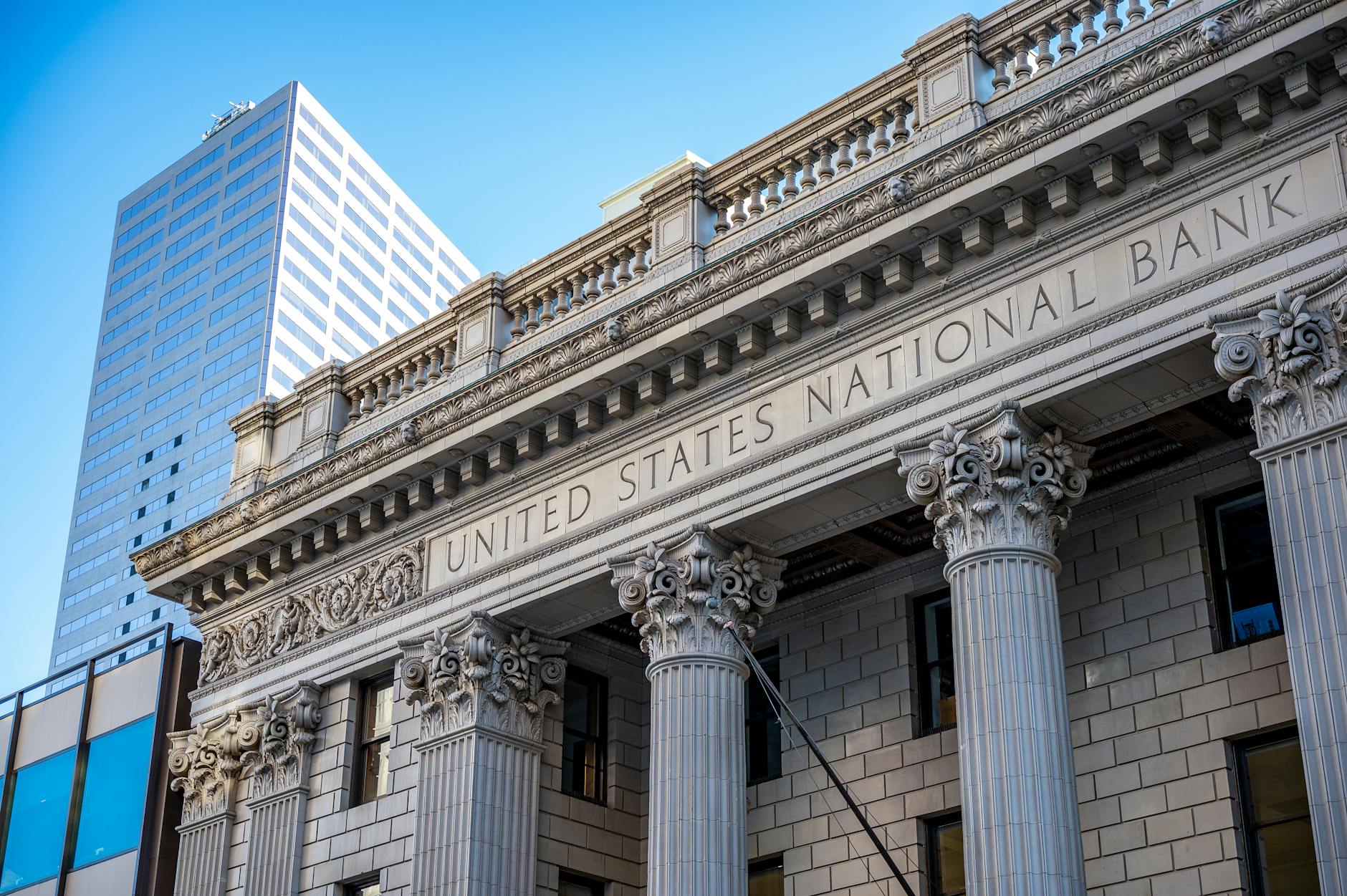
The prime rate went to 7.00% on 17 September, up from 6.75%. Anyone holding a business line of credit priced off prime had that rate change without signing anything. The reason sits one step upstream: on 16 September the Federal Reserve raised its target range for the federal funds rate by a quarter point, to 3.75% to 4.00%, on a vote of twelve to nothing. It was the first increase since July 2023, after five holds earlier this year.
The number
7.00%. Prime had sat at 6.75% since December 2025, down from a peak of 8.50% set on 27 July 2023. Reuters reported nine banks moving to 7.00% from 6.75%, effective 17 September: JPMorgan, Bank of America, Citigroup, Wells Fargo, Truist, KeyCorp, Fifth Third, Huntington and BNY. It is the first upward move in prime in more than three years.
How the money actually moves
The Fed does not set the rate a bank charges a business. It sets a band for overnight lending between banks and enforces it by paying banks interest on money parked at the Fed. That rate went to 3.90%. A bank able to earn 3.90% doing nothing needs every loan to clear a higher bar. It says so through prime, fixed by convention three points above the top of the range.
Most business borrowing is not written at a fixed number. A revolving line, a variable commercial mortgage, a business card and most variable-rate 7(a) loans are written as prime plus a spread. The spread is what was negotiated. Prime is what was not. So the rate resets by itself: on a card at the next statement cycle, on a 7(a) note at the next quarterly reset date already written into it. It arrives as a slightly larger interest line on a statement that otherwise looks identical to last month's.
On $250,000 of drawn credit, a quarter point is $625 a year. About $52 a month.
Deposits sit on the other side of the same mechanism, and it is not symmetrical. A loan rate moves because the note says it moves. Nothing in a savings account says the same. Raisin US put the national average savings yield at 0.38% in August, while prime was 6.75%.
Fixed borrowing does not take its cue from the Fed's rate. A 30-year mortgage follows long-term Treasury yields, which move on what investors expect inflation to do over years. Freddie Mac put the 30-year average at 6.95% on 17 September, against 6.76% a week earlier and 6.26% a year ago. That weekly move and the Fed's decision came out of the same inflation readings, not out of each other. The average is 0.69 points above a year ago. Most of that had already happened.
Who it hits here
An owner in Lakewood, Monsey, Brooklyn or Cleveland carrying a revolving line and a variable-rate building loan had the rate on both changed on 17 September without being consulted. The cost follows the drawn variable balance, not the number of accounts: $625 a year per $250,000 outstanding. An equipment note moves only if it was written variable.
The 7(a) ceiling moves with prime, which is where this lands for anyone holding one. The Small Business Administration's table of maximum allowable rates for variable-rate 7(a) loans caps the spread by loan size: prime plus 3.00 points above $350,000, plus 4.50 on $250,001 to $350,000, plus 6.00 on $50,001 to $250,000, and plus 6.50 at $50,000 and under. With prime at 7.00%, those ceilings go from 9.75% to 10.00%, from 11.25% to 11.50%, from 12.75% to 13.00%, and from 13.25% to 13.50%. Existing loans, at the next quarterly reset.
It is also a fuel story. The gasoline index was up 27.4% over the twelve months through August, the energy index 16.3%, according to the Bureau of Labor Statistics. Delivery vans and freight on inventory absorb that in the same month the credit line reprices. Headline inflation ran 3.4% over the year, 2.4% excluding food and energy.
What to watch
The next consumer price report lands in October, covering September. The next rate decision is Wednesday 28 October at 2 p.m. eastern, and the last of the year is 9 December. The threshold is the committee's median projection of 4.1% for end-2026 against today's 3.875% midpoint, which the projections resolve as one more quarter-point move. That would put prime at 7.25% and the 7(a) ceiling on larger loans at 10.25%. The same projections cut the 2026 unemployment forecast to 4.1% from 4.3% while raising the inflation forecast: a committee describing an economy running hot, not one slowing down.
How this was reported. MYB News wrote this story from figures reported independently by Federal Reserve Board (federalreserve.gov), Federal Reserve Board - Summary of Economic Projections (PDF), Reuters (wire copy carried on Kitco), Fox Business (Fox Corporation), UPI (United Press International), CNBC (NBCUniversal / Comcast), US Bureau of Labor Statistics, Freddie Mac (press release via GlobeNewswire) and Raisin US. The words, the structure and the local reading are our own.